The chef · 셰프
Han Seo-yun 한서윤
Raised over a soybean-paste business in South Jeolla, trained in a temple kitchen and then ten years in Seoul course kitchens. She opened Sanbang on Wilshire in 2019 with eight seats and one charcoal brazier.
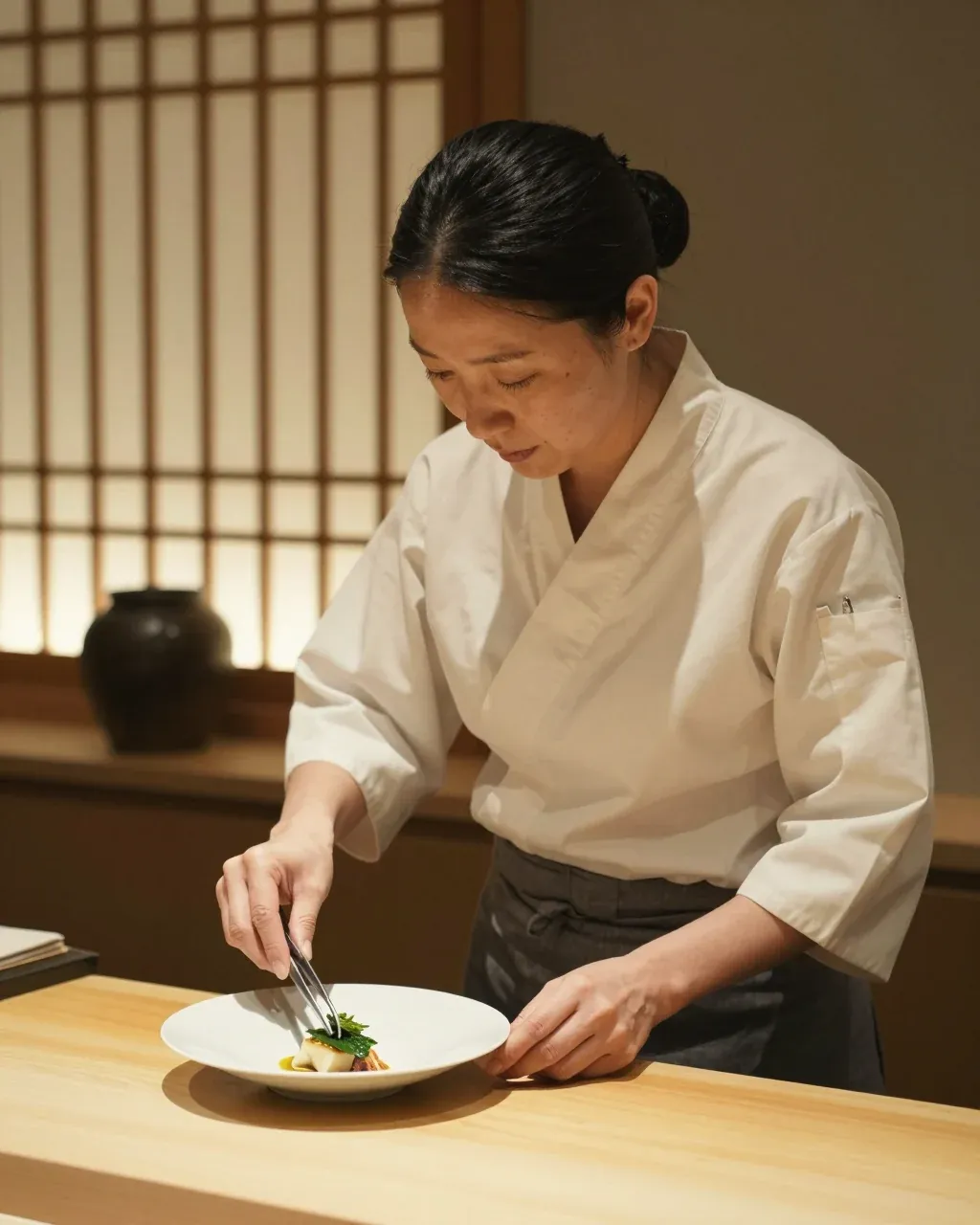
“Korean food was always seasonal. We just stopped writing it down. The course is me writing it down.”
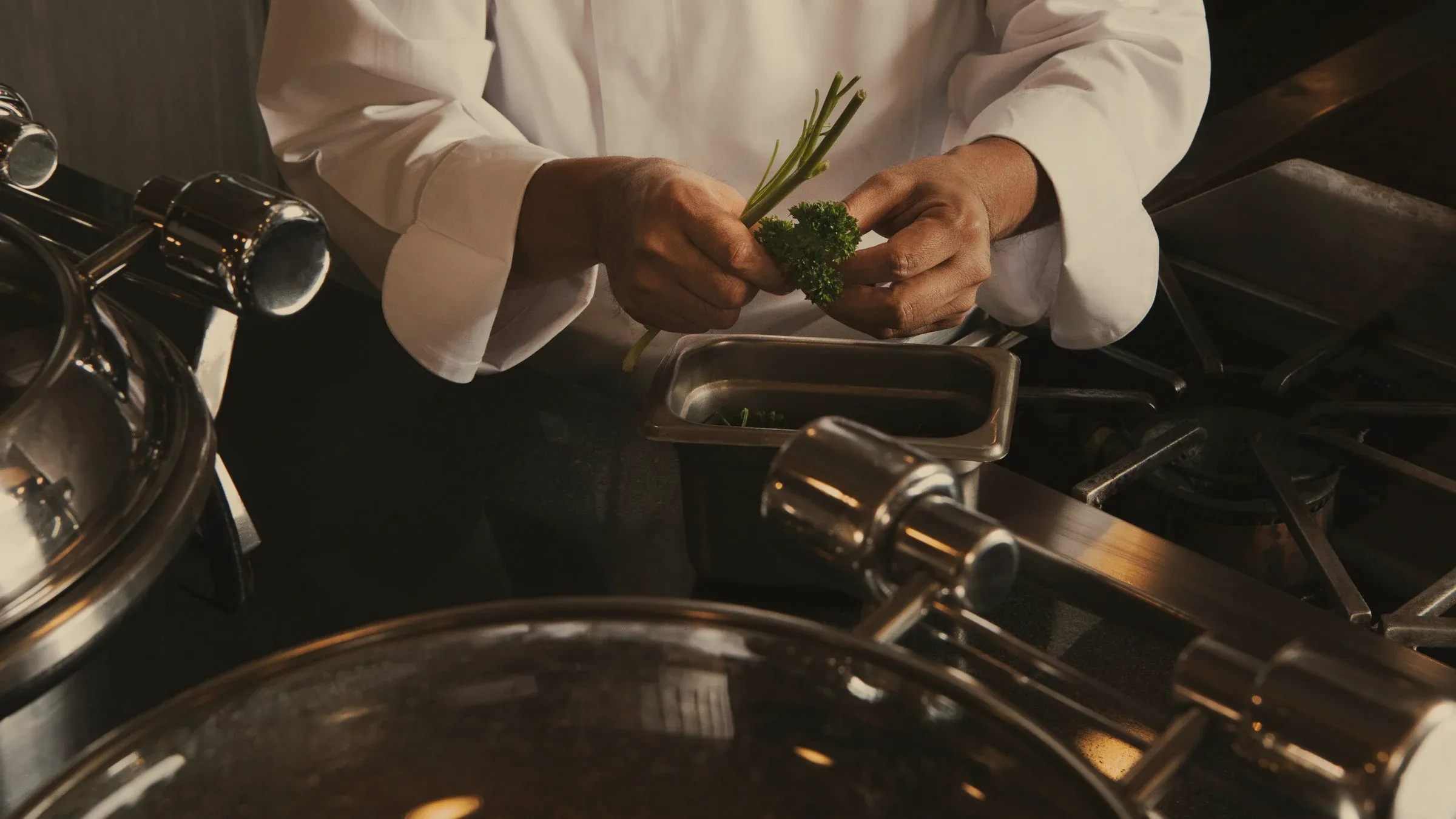
The morning is for cleaning.
Greens are picked over leaf by leaf, fish are scaled and salted, the stock goes on before nine. Most of the course is decided before anyone lights the charcoal.
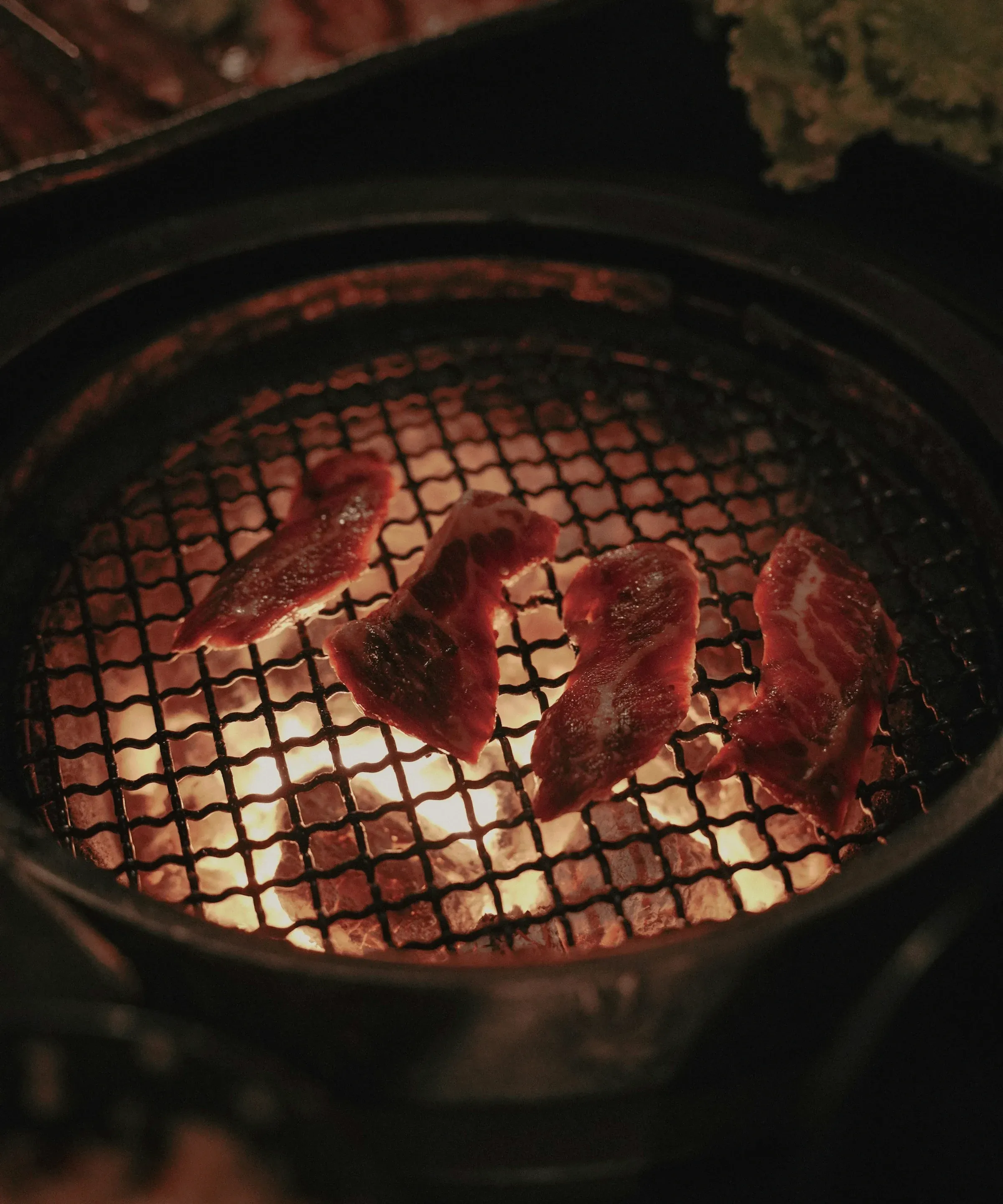
Oak charcoal, not gas.
Every grilled plate goes over white oak charcoal in a clay brazier. It is slower and it cannot be turned down, so the cooks learn to move the food instead of the flame.
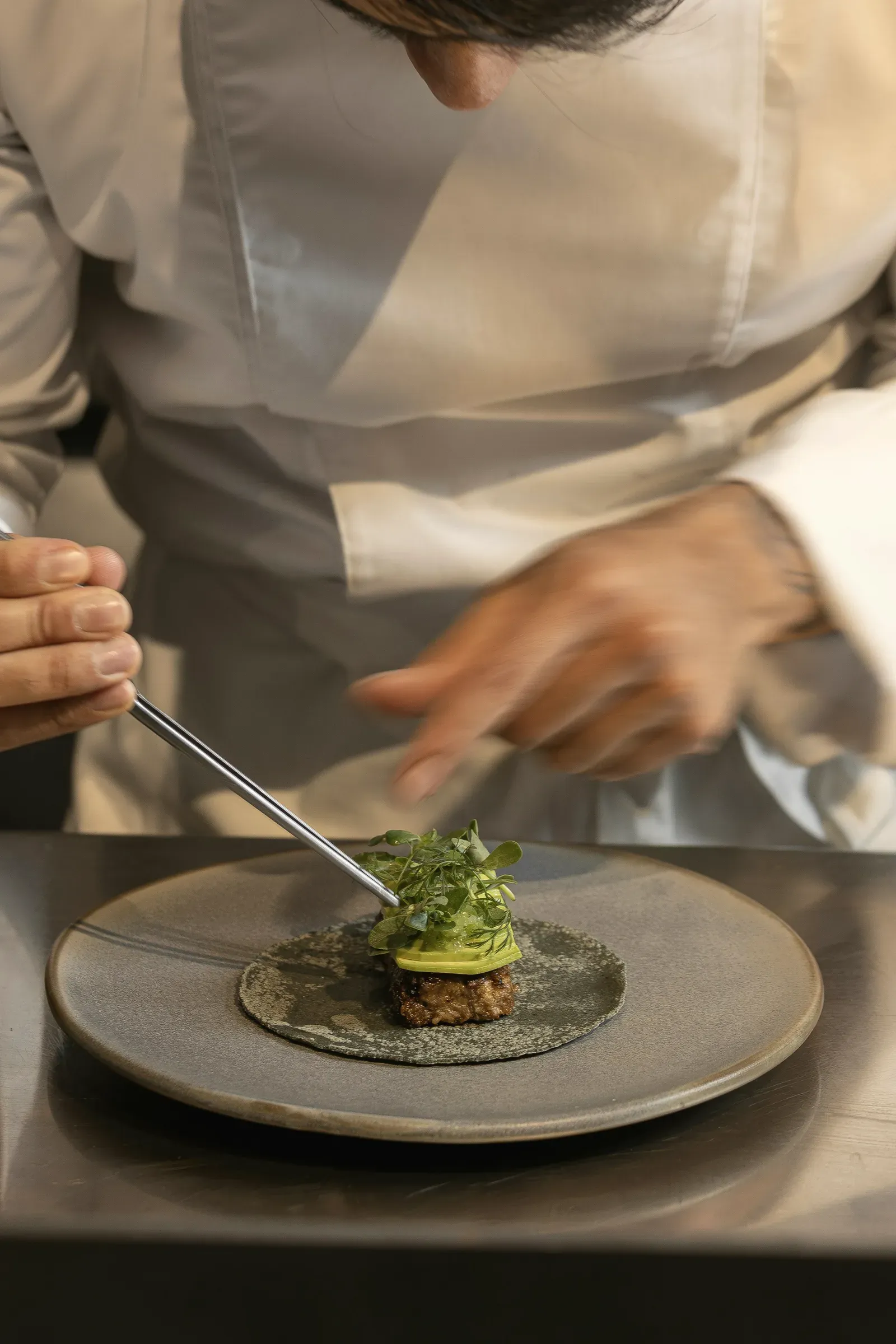
A plate is finished in front of you.
At the counter the last herb goes on as the plate is handed across. In the dining rooms the cook who made it carries it out and says what it is.
Three rules in the kitchen
What does not change when the season does.
- 一
Nothing out of season
If it is not growing in California or landing at the harbor this month, it is not on the course. Four courses a year, and small changes every week inside them.
- 二
Soy and doenjang made here
Our soy, doenjang and gochujang age in onggi jars at a soybean maker in Gardena. The doenjang on the spring course is three years old.
- 三
Rice cooked for each table
Every pot of rice is cooked to order in stone, so the course ends with the crust at the bottom of the pot, the way it does at home.
Where it comes from
Four growers, one soybean maker, the harbor.
- Mulberry Row FarmOxnard
Perilla, garlic chives, Korean melon
- Ondol AcresFresno County
Napa cabbage, radish, chili
- Three Jars SoyGardena
Our doenjang and soy, aged in onggi
- Ridgeline OrchardJulian
Persimmon, jujube, chestnut